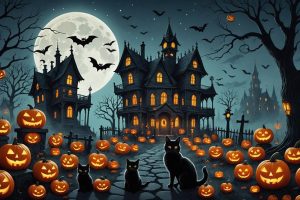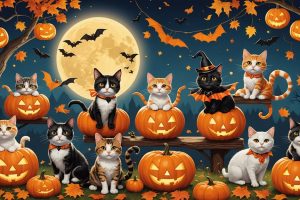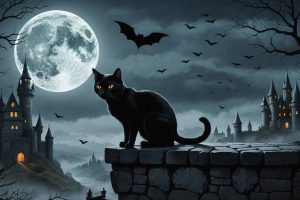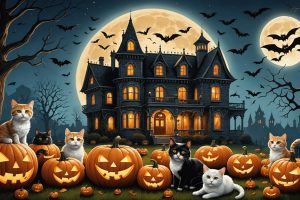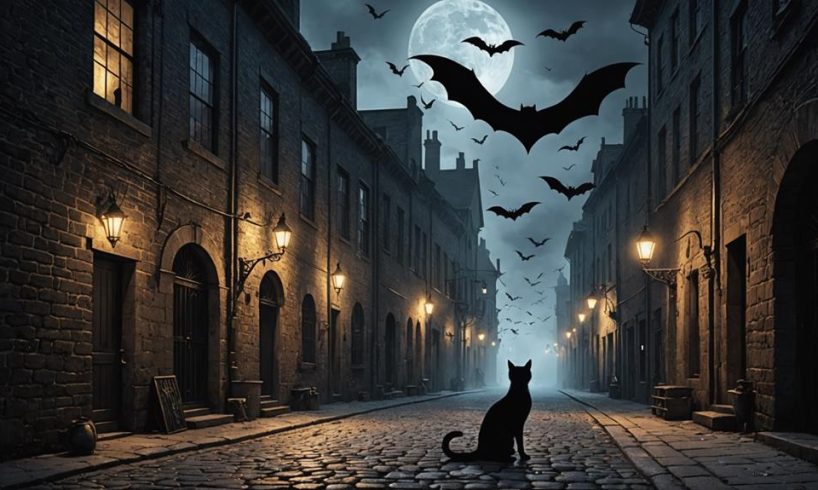
You've likely noticed how a cat's gaze seems to pierce the darkness, their eyes glowing with an unsettling intensity. As the sun sets and bats take to the sky, the world transforms into a domain of shadows, where these creatures thrive. Both cats and bats draw on a rich tapestry of folklore, each steeped in myth and mystery. But what lies behind their connection? Exploring this relationship could reveal unexpected insights into our perceptions of the night and the beings that inhabit it.

The Allure of Creepy Cats
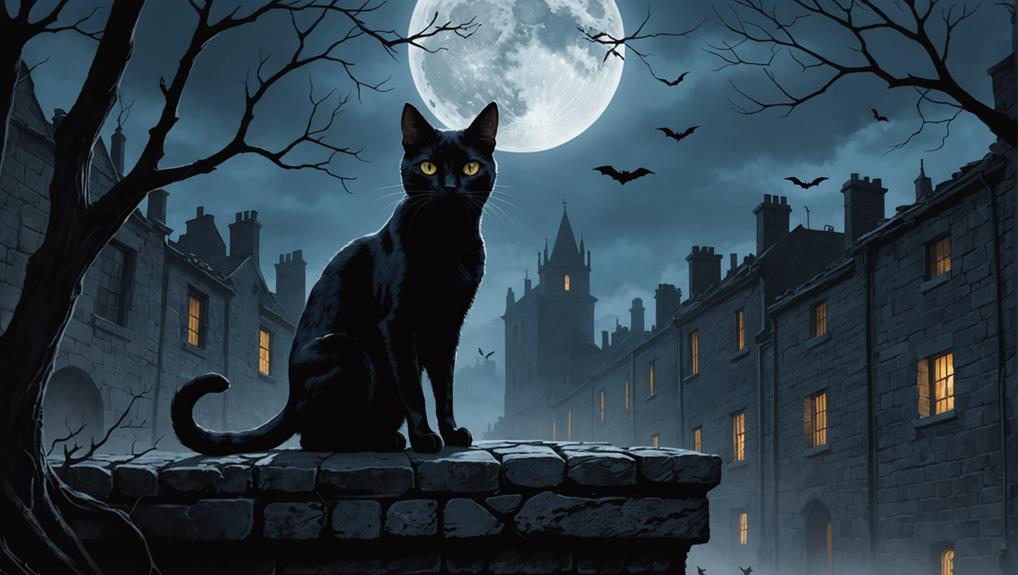
Creepy cats have an undeniable charm that draws you in, whether it's their eerie, glowing eyes or their mysterious, silent movements. You can't help but feel a mix of fascination and unease as they slink through the shadows, their presence both enchanting and unsettling. Their sleek fur, often darker shades, seems to absorb the light around them, enhancing their ghostly allure.
When you catch a glimpse of one perched high on a ledge, watching you with those piercing eyes, a shiver runs down your spine. It's as if they hold ancient secrets, whispering tales of the unknown. Their unpredictable behaviors add to the thrill—one moment they're playfully pouncing on a toy, and the next, they're staring intently at something only they can see.
You may find yourself wondering what thoughts run through their minds or what they perceive that you cannot. This combination of beauty and eeriness creates a magnetic pull, making you yearn to understand them. Whether you own one or simply admire them from afar, creepy cats have a unique ability to intrigue and inspire a sense of wonder that you can't easily shake off.

Folklore of Feline Mystique
Cats have long held a mysterious place in mythology, often seen as symbols of the supernatural. You might find it intriguing how various cultures view them as omens or protectors, shaping countless superstitions and beliefs. Let's explore these fascinating stories and the impact they've had on our perception of these enigmatic creatures.
Cats in Mythology
Throughout history, cultures have woven enchanting tales around the mystique of felines, often attributing them with supernatural qualities. You might find it fascinating that in ancient Egypt, cats were revered as sacred beings linked to the goddess Bastet, symbolizing protection, fertility, and motherhood. Their graceful movements and stealthy hunting skills led to beliefs that they could traverse between the physical and spiritual domains.
In Norse mythology, the goddess Freyja had a chariot pulled by two giant cats, further enhancing their image as creatures of power and magic. You can see how these narratives shaped the way people viewed cats, often seeing them as companions of deities or harbingers of fortune.
In Japanese folklore, the "bakeneko" and "nekomata" are mythical cats said to possess magical abilities, capable of transforming into human forms. These stories reveal how cats were often seen as mysterious beings, embodying both charm and danger. By exploring these myths, you uncover a rich tapestry of beliefs that elevate cats beyond mere pets, placing them firmly in the domain of the mystical and the extraordinary.

Superstitions and Beliefs
Many people still hold superstitions about cats, often viewing them as symbols of luck or misfortune. If you've ever spotted a black cat crossing your path, you might've felt a shiver run down your spine, believing it's an omen of bad luck. In contrast, some cultures celebrate black cats, considering them harbingers of good fortune and prosperity.
You might also have heard that if a cat washes its face, it's preparing for a visitor. This belief suggests that felines can sense when someone's about to come knocking at your door. Then there's the notion that cats have nine lives, giving them an air of mystique and resilience.
In ancient Egypt, cats were revered and even worshipped, embodying divine protection. You may even have encountered the idea that cats can see spirits or detect negative energies, making them guardians of the home.
These beliefs and superstitions shape how you perceive cats, blending admiration with a sprinkle of caution. Whether you see them as lucky charms or harbingers of doom, it's clear that the lore surrounding these creatures adds to their enigmatic allure.
Bats: Nature's Night Flyers
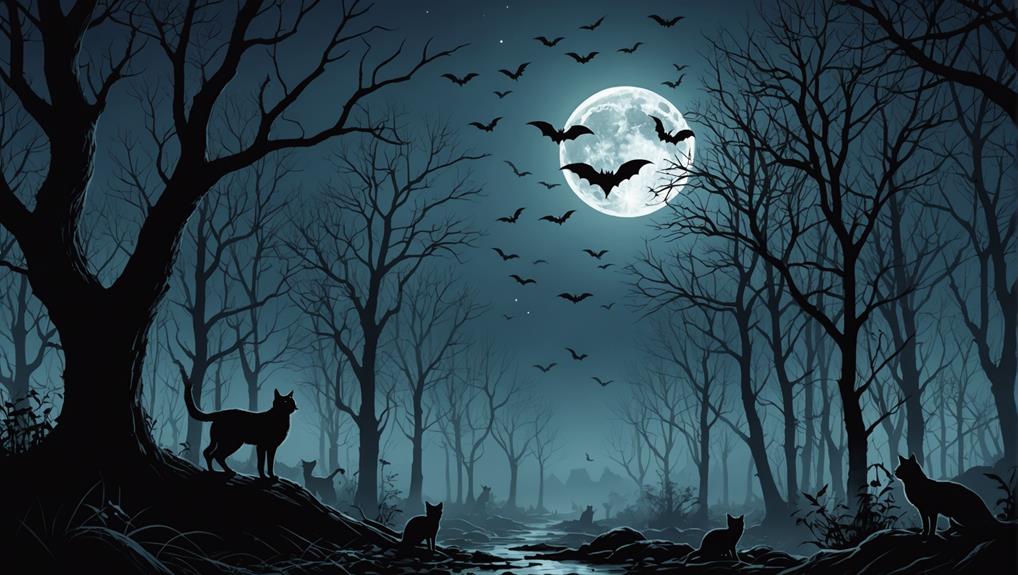
Bats, often misunderstood and shrouded in mystery, play a significant role in our ecosystem as nature's night flyers. These fascinating creatures are essential for pollination, seed dispersal, and pest control. By feeding on insects, they help keep populations in check, promoting healthier crops and reducing the need for pesticides.
Here's a quick overview of the different types of bats and their unique contributions:
| Bat Type | Main Diet | Ecological Benefit |
|---|---|---|
| Fruit Bats | Fruits and nectar | Pollination and seed dispersal |
| Insectivorous | Insects | Pest control |
| Fish Bats | Fish | Maintaining fish populations |
Bats navigate through the darkness using echolocation, sending out high-frequency sounds to locate prey and avoid obstacles. Their nocturnal habits make them essential for ecosystems that thrive at night. By fostering a balance in nature, they contribute to the health of various habitats. Next time you hear the flutter of wings in the night, remember the incredible role these creatures play in supporting life on Earth. It's not just about the fright; it's about the fight for ecological harmony.
Myths Surrounding Bats
You might think bats are just creepy, bloodsucking creatures lurking in the dark, but that's far from the truth. These nocturnal animals are often misunderstood, leading to a host of cultural superstitions that paint them in a negative light. Let's bust some of these myths and uncover the real role bats play in our ecosystem.
Bats and Bloodsucking Myths
What makes bats such intriguing creatures often stems from the myths that surround them, particularly the notion that they're bloodsuckers. While some species, like the infamous vampire bat, do feed on blood, it's essential to understand that they make up a tiny fraction of the over 1,400 bat species worldwide. The vast majority are harmless and play significant roles in ecosystems.
Here's a quick look at common myths versus the reality of bats:
| Myth | Reality |
|---|---|
| All bats are bloodsuckers. | Only three species, mainly in Latin America, feed on blood. |
| Bats are flying rodents. | Bats are more closely related to primates than rodents. |
| Bats are dirty and disease-ridden. | Bats help control pests and pollinate plants; they're crucial for ecosystems. |
| Bats will attack humans. | Bats are generally shy and avoid human contact. |
| They're blind. | Bats have excellent vision and use echolocation to navigate. |
Nocturnal Creatures Misunderstood
The world of nocturnal creatures, particularly bats, is often shrouded in misconceptions that can lead to fear and misunderstanding. You might picture bats as terrifying, bloodthirsty monsters, but the truth is far from that. Most bats are harmless and play essential roles in our ecosystems. For instance, many bats feast on insects, helping control pest populations naturally.

You may have heard that bats are blind, but that's just a myth. In reality, they can see quite well, and they use echolocation to navigate their surroundings and find food in complete darkness. It's an incredible adaptation that showcases nature's ingenuity.
Another common misconception is that all bats carry diseases. While it's true some can be carriers, the actual risk to humans is minimal. Healthy bats contribute to biodiversity and help pollinate plants, including some of your favorite fruits.
Understanding these facts can shift your perspective on these misunderstood creatures. Instead of fearing bats, consider their critical role in maintaining the balance of our ecosystems. By appreciating their contributions, you can help dispel the myths that surround them.
Cultural Superstitions About Bats
Many cultures around the world have woven bats into their folklore, often casting them as symbols of bad luck or evil. If you've ever heard that bats bring misfortune, you're not alone. In some European traditions, it's said that if a bat flies into your home, it heralds a death. This belief can make you wary every time you spot one fluttering above.
In contrast, other cultures see bats as symbols of transformation and rebirth. In Chinese mythology, five bats together represent happiness and good fortune. You might even find bat motifs in art and decor, symbolizing prosperity rather than doom.
In parts of Latin America, bats are linked to the supernatural, often associated with witches or spirits. This connection can make you feel uneasy, especially when you hear tales of shape-shifting creatures.
As you explore these varied beliefs, it's essential to remember that bats are crucial to ecosystems, aiding in pest control and pollination. So, the next time you encounter a bat, consider the rich tapestry of myths surrounding them and how your perception might shift with a little knowledge.
Cats in Superstitions
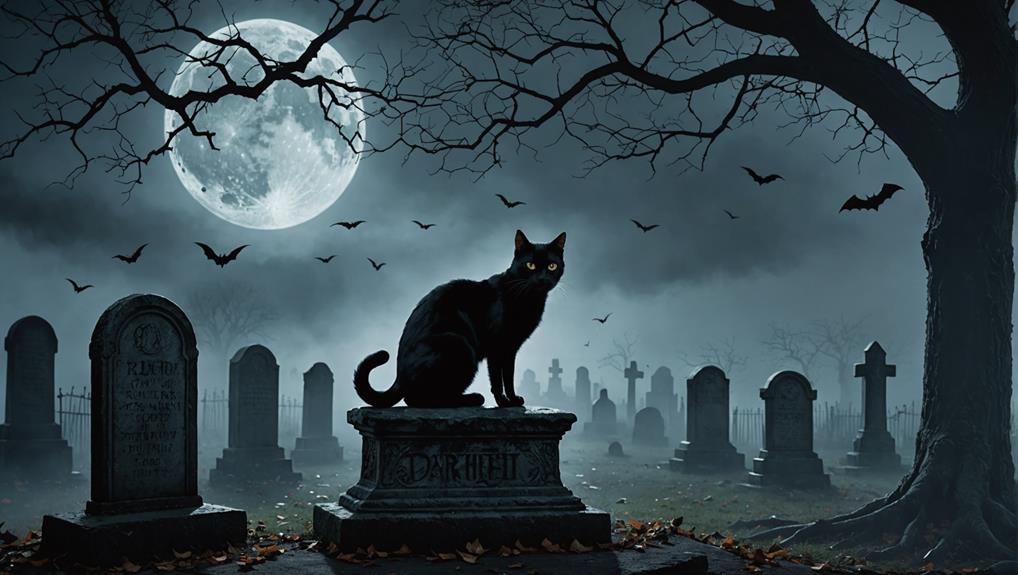
Throughout history, people have often associated cats with mystery and superstition. You might find it fascinating how these enigmatic creatures have inspired various beliefs across cultures. For instance, in medieval Europe, black cats were often seen as witches' familiars, thought to bring bad luck. Conversely, in ancient Egypt, they were revered as sacred beings, believed to protect households from evil spirits.
Here's a glimpse into some common superstitions about cats:

| Superstition | Meaning / Belief |
|---|---|
| Black cats crossing paths | Bad luck or misfortune may come your way |
| Cats washing their face | Visitors are on the way |
| A cat sneezing | A sign of good fortune or blessings |
These superstitions highlight how perceptions of cats can vary dramatically. Whether you see a black cat as a harbinger of doom or a sign of good luck, their presence continues to intrigue and mystify. Each encounter with a feline friend might just carry a deeper meaning, reminding you that cats are more than just pets; they're steeped in the rich tapestry of human belief and folklore.
Bats in Cultural Narratives
Bats have long fluttered through the shadows of cultural narratives, often symbolizing both fear and fascination. In many cultures, they embody the unknown, representing death, darkness, and the supernatural. You might recall stories where bats emerge as ominous creatures, lurking in the night, signaling impending doom or misfortune. These narratives tap into our primal fears, evoking shivers down your spine.
Yet, not all portrayals are negative. In some traditions, bats symbolize rebirth and transformation. You'd find them in tales where they guide lost souls or serve as protectors of the night. Their ability to navigate the dark has made them symbols of intuition and vision, urging you to look beyond the surface.
In popular culture, bats become iconic figures, appearing in literature and films that explore themes of horror and mystery. You might remember Dracula's transformation into a bat, a chilling representation of power and seduction. Such narratives shape our perceptions, intertwining fear with a sense of wonder. Ultimately, bats' presence in cultural stories invites you to confront your own fears while sparking curiosity about the mysteries that dwell in the dark.
The Connection Between Cats and Bats
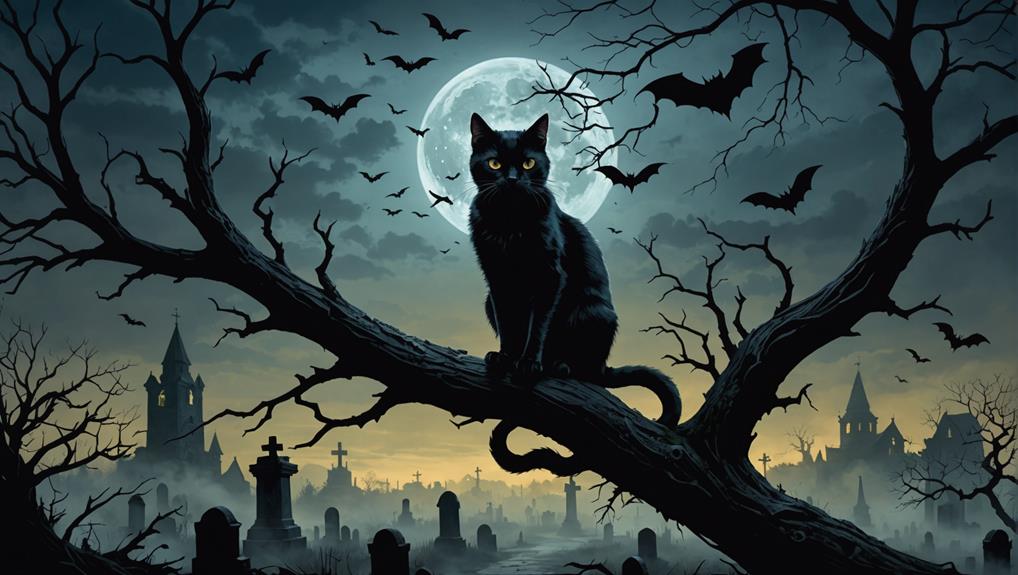
The intertwining of cats and bats in folklore and popular culture often highlights their shared association with mystery and the supernatural. You might notice that both creatures have often been linked to witches and the occult, enhancing their eerie reputations. In many tales, cats are depicted as companions to witches, while bats flutter around ominously, further intensifying the spooky atmosphere.
Moreover, the nocturnal nature of both animals adds to their mystique. You may find it intriguing that they're both more active at night, traversing the darkness with ease. This shared behavior evokes a sense of the unknown, making them perfect symbols for stories that explore the supernatural.
Additionally, cats and bats have unique physical characteristics that make them appear otherworldly. Cats' glowing eyes and stealthy movements can remind you of the elusive flight of bats, creating an uncanny connection. You might also come across various myths where cats are said to possess powers similar to those attributed to bats, like shape-shifting or bringing bad omens.
In essence, the connection between cats and bats runs deep, enriching folklore and popular culture with their shared air of mystery and darkness.
Embracing the Nighttime Atmosphere
As you step into the nighttime territory, the atmosphere transforms into a sphere filled with enchantment and intrigue. Shadows dance beneath the silvery moonlight, and the cool breeze whispers secrets only the night knows. You can almost feel the energy shift as nocturnal creatures come alive, each one adding to the mysterious ambiance.
Embrace the sights and sounds around you. Listen to the rustling leaves and the distant hoots of owls, creating a symphony that celebrates the night. You might catch a glimpse of a cat slinking through the darkness, its eyes glinting like tiny lanterns. It's a reminder that you're not alone; the night is teeming with life.
Use this time to reflect and recharge. The stillness offers a unique clarity, allowing thoughts to flow more freely. Whether you're wandering through a moonlit park or cozying up at home, let the nighttime enchant you. Embrace the eerie beauty of the night—it's a canvas painted with shadows and illuminated by stars. So, take a deep breath, soak in the atmosphere, and let the magic of the night envelop you, inviting adventure and curiosity.
Read The Next Blog Post –
As you embrace the enchanting world of creepy cats and bat-filled nights, you'll discover a dance of shadows that captivates the imagination. These mysterious beings, like whispers of the night, weave together tales of folklore and superstition, inviting you to explore the depths of the unknown. In this twilight domain, where curiosity mingles with wonder, you'll find that the magic of the night is alive, urging you to revel in the beauty of the enigmatic.