


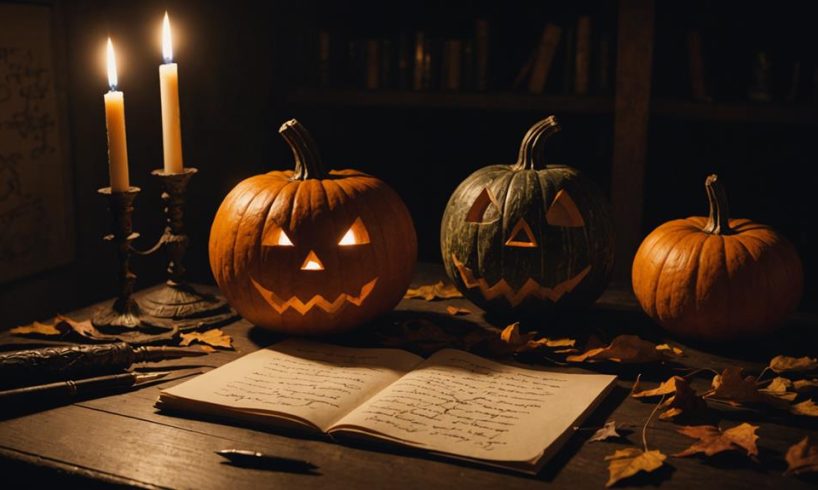
As you consider the rich traditions of Halloween, you might find inspiration lurking in the shadows of your imagination. The act of pumpkin carving, for instance, isn't just about crafting a face; it's an invitation to explore deeper themes of fear and transformation. By shaping eerie characters and unsettling settings, you can create narratives that linger long after the last trick-or-treater has left. But how do you weave these elements together into a cohesive plot that captivates? The answer lies in the interplay of suspense and surprise, where every twist can lead to unforeseen revelations.

Inspiration From Halloween Traditions

As the leaves turn and a chill settles in the air, Halloween traditions offer a treasure trove of inspiration for your creative writing. You can immerse yourself in the rich history of this spooky season, drawing from customs like pumpkin carving, costume parties, and trick-or-treating. Each tradition provides a unique backdrop for your stories, allowing you to explore themes of fear, community, and mystery.
Think about the symbolism of the jack-o'-lantern. It's not just a fun decoration; it represents warding off evil spirits. You might weave a tale around a haunted pumpkin patch where the carved faces come to life at midnight.
Costumes, too, spark ideas. What if a character finds an ancient costume that grants them supernatural powers? This could lead to unexpected adventures or terrifying consequences.
Trick-or-treating evokes nostalgia and childhood wonder, but it can also be a gateway to darker narratives. Imagine a group of friends uncovering a sinister secret hidden in their neighborhood while out collecting candy.
Crafting Spooky Characters
When crafting spooky characters, think about the archetypes and tropes that can set the stage for your story. Consider how their haunting backstories can add depth and complexity, making them more than just a cliché. Don't forget to give them unforgettable quirks and traits that will linger in your readers' minds long after the last page.
Character Archetypes and Tropes
Crafting spooky characters involves tapping into familiar archetypes and tropes that resonate with readers' fears and curiosities. By using these elements, you can create memorable figures that linger in the audience's minds long after the story ends. Here are three key archetypes to reflect upon:
- The Reluctant Hero: This character often finds themselves in terrifying situations but must rise to the challenge, battling not just external threats but their own fears. Readers root for them because they see their vulnerability.
- The Eerie Villain: This character embodies chaos and dread, often possessing a chilling backstory that fuels their malevolence. Their unpredictability keeps readers on edge, making every encounter a nail-biting experience.
- The Innocent Victim: This archetype elicits sympathy and heightens tension. As readers connect with their plight, the stakes are raised, and the fear of losing them becomes palpable.
Backstories That Haunt
Backstories that haunt your characters can elevate a story from merely spooky to deeply unsettling. When you craft a character, think about their past—what shadows linger behind them? Maybe they lost a loved one in a tragic accident or experienced betrayal that shapes their every decision. These painful memories can manifest in chilling ways, influencing their actions and reactions.

Consider a character who grew up in a haunted house. The echoes of their childhood fears could manifest as a deep-seated paranoia, making them perceive threats where none exist. Or perhaps a character who once committed a terrible act in a moment of desperation now battles guilt that surfaces in the most unexpected situations.
As you develop these backstories, let their trauma seep into the narrative. A character's haunted past can create tension and suspense, as readers become invested in the emotional stakes. By intertwining their history with the present, you'll craft a character whose struggles resonate, making the horror feel all the more real. Ultimately, these backstories enrich your story, inviting readers to explore the darker corners of your characters' souls.
Unforgettable Quirks and Traits
In the shadows of your story, unforgettable quirks and traits can breathe life into spooky characters, making them memorable and engaging. These unique features set them apart, inviting readers to dive deeper into their eerie worlds. Here are three traits that can haunt your characters long after the last page is turned:
- Phantom Laughter: Picture a ghostly figure whose laughter echoes through abandoned halls, a sound that sends shivers down spines. This unsettling trait invites curiosity and fear, leaving a lasting impression.
- Unblinking Eyes: Imagine a character whose eyes seem to follow you, unblinking and unnaturally bright. This quirk can create an unsettling atmosphere, making readers question what lies behind that gaze.
- A Peculiar Collection: Consider a character who collects oddities—like jars filled with mysterious substances or dolls with cracked porcelain faces. This bizarre collection not only adds depth but also hints at their dark past.
Building Eerie Settings
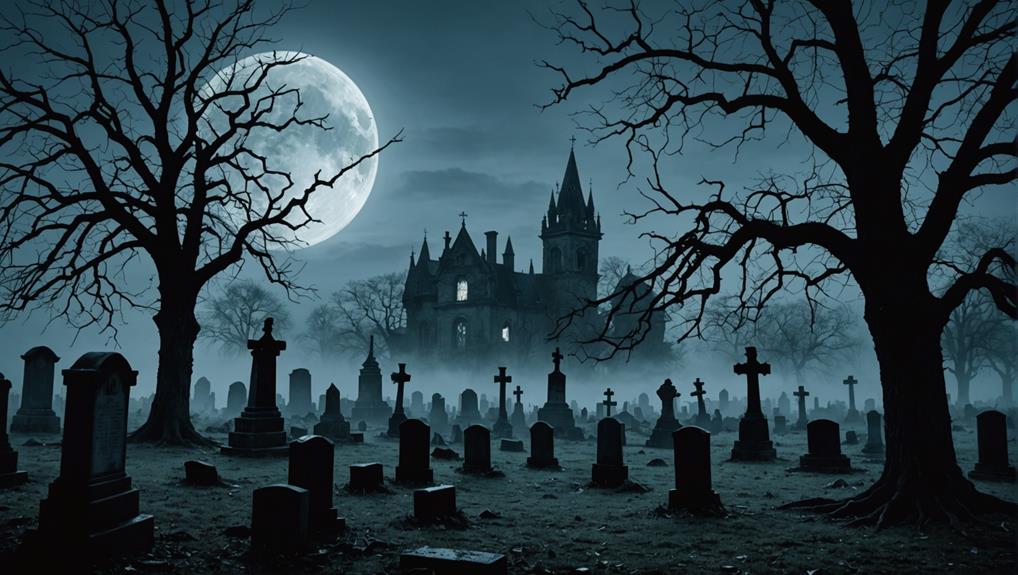
When you create an eerie setting, atmospheric descriptions really set the tone. Play with shadows and light to cast unsettling shapes, and don't underestimate the power of sounds or silence to heighten tension. These elements combine to draw your readers into a world that feels both familiar and chillingly strange.
Atmospheric Descriptions Matter
Amidst the swirling fog, shadows stretch and twist, transforming familiar spaces into domains of dread. You step cautiously, your breath hitching in your throat as the air thickens with tension. Every creak of the floorboards seems amplified, a reminder that you're not alone. The atmosphere holds a weight, pressing down like a shroud, whispering secrets of the unseen.
To create an eerie setting, consider these elements:
- Sound: The rustle of leaves, the distant hoot of an owl—each sound amplifies your unease, making you question what lies ahead.
- Smell: Musty, damp earth or the faint scent of decay can linger in the air, stirring your instincts to flee.
- Sight: Flickering candlelight casting monstrous shapes on the walls can distort reality, leaving you guessing whether it's just your imagination or something more sinister.
Every detail matters in crafting an atmosphere that pulls readers into a chilling experience. You want them to feel the chill at the nape of their neck, the pulse of fear quickening with every heartbeat. Create a world that's as haunting as it is enchanting.
Utilizing Shadows and Light
Shadows dance across the walls, weaving a tapestry of uncertainty that grips your senses. You step into the dimly lit room, where flickering candlelight creates an almost alive atmosphere. The interplay of light and darkness plays tricks on your mind, as shapes morph and shift in the corners of your vision. You can't shake the feeling that something lurks just beyond the reach of the light.
As you move deeper into the space, you notice how the shadows seem to elongate and stretch, creating an illusion of movement. Every creak of the floorboards echoes like a whisper, urging you to pay attention. The light catches the edges of an old mirror, its surface reflecting back a distorted version of reality, enhancing the eeriness that envelops you. You find yourself drawn to the darker corners, where the light barely penetrates, a primal curiosity battling against your instinct to retreat.
In this world of shadows, your imagination runs wild. You're not just a spectator; you're part of the haunting narrative, where every flicker and dimness tells a story waiting to be uncovered. Embrace the shadows, and let them guide your creativity into the unknown.
Incorporating Sounds and Silence
Three distinct sounds punctuate the silence of the night: the distant howl of the wind, the soft rustle of leaves, and the occasional creak of an old house settling. Each sound wraps around you, pulling you deeper into the eerie atmosphere. As you move through this shadowy world, it's essential to embrace the symphony of noises that heighten the suspense.
Consider these elements to amplify the creepiness:
- Footsteps on gravel – The crunch underfoot feels like a warning, echoing into the dark.
- Whispers of the past – Imaginary voices drift through the air, telling tales of those who once roamed these grounds.
- The sudden snap of a twig – It startles you, a reminder that you're not alone.
Silence can be just as powerful. Leave moments of stillness between sounds, allowing tension to build. This quiet, pregnant with expectation, keeps your readers on edge. By carefully layering sounds and silence, you craft an atmosphere that's haunting and unforgettable, inviting the chilling thrill of Halloween into your writing.
Weaving Gripping Plots
Every writer knows that a gripping plot can make or break a Halloween story. To capture your reader's attention, start with a strong hook. Imagine opening with a chilling event—perhaps a child discovers a cursed object on Halloween night. This sets the stage for suspense and intrigue right away.
Next, develop relatable characters who face real stakes. You want your readers to care about their fate. Give your protagonist a compelling goal, like uncovering the mystery behind the cursed object, and introduce obstacles that heighten tension. Maybe they encounter a rival who wants the object for themselves or a ghostly figure that warns them to back off.
Pacing is essential. Keep the momentum going with twists and turns; don't let your readers catch their breath. Each revelation should build suspense, leading to a climactic confrontation that tests your characters' resolve. Finally, wrap it up with an ending that leaves them thinking. Whether it's a shocking twist or a bittersweet resolution, guarantee the conclusion resonates. With these elements, you'll weave a plot that keeps readers on the edge of their seats, enthusiastic for more spine-tingling tales.
Exploring Different Genres

As you craft your spine-tingling Halloween tale, consider how different genres can elevate your storytelling. Each genre offers unique tools and themes that can amplify the eerie atmosphere you want to create. Here are three genres to explore:
- Horror: Explore the classic elements of fear and suspense. Use vivid imagery and unsettling scenarios to keep your readers on edge. Think about what truly terrifies you and translate that into your writing.
- Fantasy: Introduce mythical creatures or enchanted settings that twist traditional Halloween themes. You can create a world where magic intertwines with fright, offering a fresh perspective on familiar tales, like witches and ghosts.
- Mystery: Engage your audience with an intriguing plot that begs to be solved. Incorporate clues and unexpected twists, allowing your readers to piece together the chilling story as they follow your protagonist on their spine-chilling adventure.
Writing Poetry for Halloween
Halloween's haunting allure can inspire some of the most evocative poetry. As the leaves crunch underfoot and shadows dance in the moonlight, you might find yourself captivated by the eerie beauty of this season. Think about the sights and sounds around you. The flickering jack-o'-lanterns, the rustle of costumes, and the whispers of ghost stories can all serve as rich imagery for your verses.
Begin by tapping into the emotions that Halloween evokes. Do you feel a chill of fear, a spark of nostalgia, or perhaps a sense of wonder? Use these feelings to guide your words. Experiment with different forms, whether it's a spooky haiku or a free verse exploration of haunted landscapes.
Don't shy away from metaphor and simile; they're your allies in crafting vivid imagery. Compare the waning moon to a ghostly eye or describe the crisp air as a shiver running down your spine. Let your senses lead you. Listen to the night, observe the details, and let the atmosphere envelop you. Before you know it, you'll have created a poem that captures the essence of Halloween, drawing readers into its mysterious embrace.

Tips for Editing and Revising

How can you transform your Halloween poetry from good to great? Editing and revising are vital steps in the writing process, allowing you to refine your ideas and enhance your poem's impact. Here are three essential tips to guide you:
- Read Aloud: Hearing your words can reveal awkward phrasing or clunky rhythms. Listen for flow and emotion; if it doesn't sound right, it probably needs tweaking.
- Cut Unnecessary Words: Less is often more in poetry. Eliminate filler words and phrases that don't add value. Focus on strong imagery and concise language that evoke the Halloween spirit.
- Seek Feedback: While your voice is unique, fresh perspectives can provide valuable insights. Share your work with trusted friends or writing groups to gain constructive criticism.
Once you've applied these tips, revisit your poem with fresh eyes. Look for areas that still need polishing and don't hesitate to make bold changes. Your Halloween poem deserves to shine, so take the time to refine it until it captures the essence of the season perfectly!
Sharing Your Work With Others
Sharing your work with others can open up a world of inspiration and growth. When you let someone read your Halloween-themed stories or poems, you invite feedback that can spark new ideas. Consider joining a local writing group or an online forum where fellow writers gather to share their work. This not only helps you gain fresh perspectives but also builds your confidence.
Don't shy away from sharing your pieces with friends or family. Their reactions might surprise you and could provide valuable insight into how your writing resonates. Remember, constructive criticism can be a goldmine for improvement.
Social media platforms are another great way to showcase your Halloween writing. Create engaging posts that invite your audience to interact with your work; ask them for their thoughts or even to share their own spooky stories.
Lastly, consider submitting your work to contests or anthologies. This can open doors to new readers and opportunities. Embrace the feedback you receive, and let it guide you to hone your craft. Sharing your writing isn't just about seeking approval; it's about creating a community that thrives on creativity. So, go ahead and share your haunting tales!
Read The Next Blog Post –
As you step away from your Halloween creative writing journey, remember that each story you craft is a flickering candle in the dark, illuminating the shadows of your imagination. Embrace the traditions, characters, and settings you've woven together, letting them breathe life into your narratives. With a little editing and a dash of courage, you can share your haunting tales with others, inviting them to join you in the dance of eerie enchantment. Happy writing!


